UAV & Counter-UAS Systems
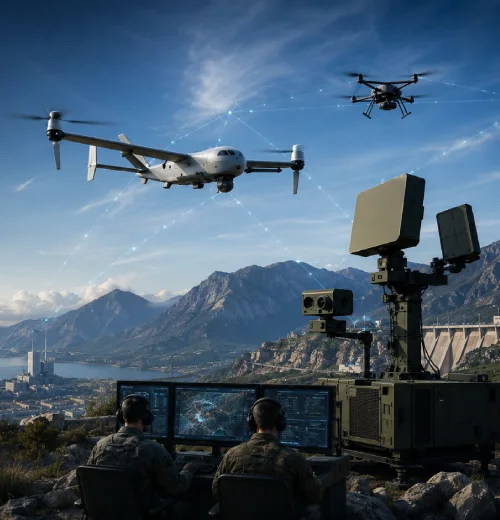
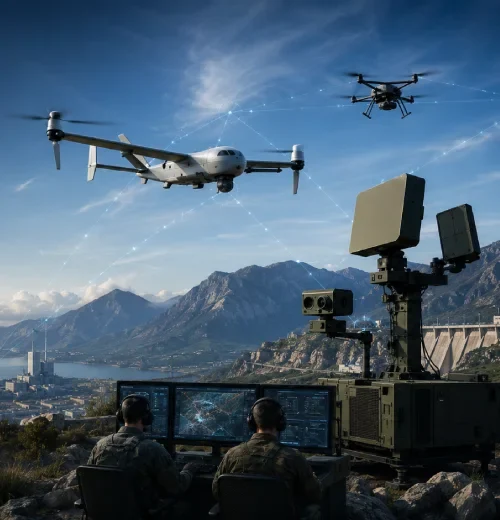
UAV and Counter-UAS Systems provide defense, government, civil-security, and critical-infrastructure operators with autonomous aerial platforms and layered drone-threat awareness. From Montréal, RSAT Space develops heavy-lift rotary UAVs, tactical VTOL ISR platforms, GNSS-independent navigation, mission avionics, ground support, and integrated counter-UAS capabilities using RF surveillance and radar-based detection.
These systems support secure operations, persistent intelligence, resilient navigation, and coordinated multi-domain missions across Canada and allied markets.
Why Choose Us for UAV & Counter-UAS Systems
RSAT Space approaches UAV programs as complete mission systems rather than isolated airframes. The client-provided portfolio shows capability across conceptual engineering, platform development, autonomous flight software, AI-assisted object detection, mechanical and structural design, flight operations, training, and lifecycle maintenance. That breadth helps customers align the aircraft, payload, software, navigation, communications, and operator workflow around one defined operational requirement.
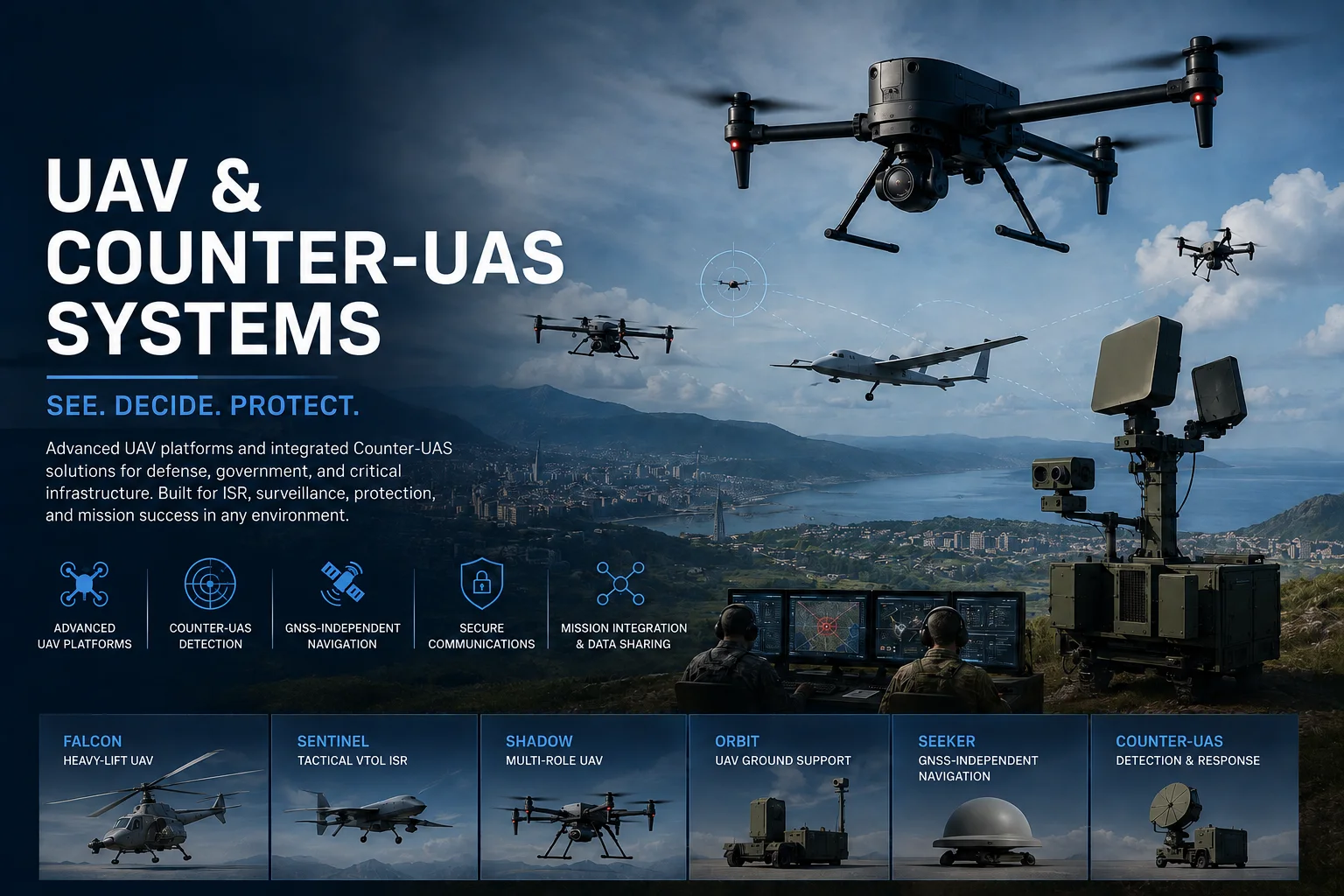
The UAV portfolio spans distinct mission classes instead of forcing one platform into every role. FALCON addresses heavy-lift and long-endurance operations; SENTINEL supports tactical VTOL reconnaissance and ISR; SHADOW provides compact multi-role rotary-wing capability; ORBIT supports persistent field operations; SEEKER strengthens navigation where GNSS is unavailable or disrupted; and RSAT’s avionics family supports mission computing, telemetry, flight control, power management, and payload integration.
RSAT Space also designs these systems to work together. The client material describes an integrated mission ecosystem in which observation, secure data relay, aerial platforms, and ground support can share information through coordinated workflows. This cross-platform approach is valuable for organizations that need UAV operations to fit into broader command, ISR, communications, and multi-domain environments instead of creating another disconnected system.
For counter-drone missions, RSAT Space develops ground RF systems, surveillance radars, and specialized Counter-UAS technologies for bases, borders, and critical sites. These capabilities connect with the wider intelligence network so operators can share tracks and alerts, detect and classify drone activity, coordinate responses, and retain an auditable operational picture for review and planning.

Phone Number
+1 514-399-1097
Business Location
2329 Guenette St, Montreal, Quebec H4R 2E9, Canada
E-Mail ID
[email protected]UAV Systems Questions Answered
What UAV platforms does RSAT Space offer?
RSAT Space’s UAV systems include heavy-lift autonomous rotary platforms, tactical VTOL ISR aircraft, compact multi-role rotary systems, loitering platforms, FPV systems, autonomous ground support, GNSS-independent navigation, and integrated avionics. The portfolio is structured around different mission requirements rather than a single aircraft configuration.
How do RSAT UAVs support ISR missions?
RSAT UAV systems support ISR through EO/IR imaging, SAR integration, LiDAR, RF and SIGINT payload options, real-time video, autonomous navigation, and secure communications. Platforms such as FALCON and SENTINEL are designed for surveillance, reconnaissance, border monitoring, target tracking, and other missions requiring persistent situational awareness.
Can RSAT UAVs operate without GNSS?
Yes. GNSS-independent navigation is a defined part of the RSAT portfolio. The SEEKER visual navigation system is designed to provide position, velocity, and orientation information when GNSS signals are unavailable, jammed, or spoofed, supporting more resilient autonomous UAV operations in contested or signal-degraded environments.
What does RSAT Counter-UAS capability include?
RSAT’s Counter-UAS capability includes ground RF surveillance, surveillance radar, track and alert sharing, and integration with a wider intelligence network for drone detection, classification, and coordinated response. This layered Counter-UAS approach is positioned for bases, borders, critical sites, defense users, civil security, and infrastructure operators.
Who needs UAV and Counter-UAS systems?
UAV and Counter-UAS systems are relevant to defense organizations, government agencies, border and coastal security teams, civil-security operators, and critical-infrastructure owners that need aerial intelligence or protection from unauthorized drones. RSAT Space also identifies selected civilian UAV applications such as disaster surveillance, infrastructure inspection, mapping, and environmental monitoring.
Can RSAT integrate existing command systems?
RSAT Space designs UAV and Counter-UAS integration around shared data, secure communications, mission workflows, and existing command environments. Its current multi-domain architecture is intended to connect aerial, ground, space, and ISR assets, helping customers incorporate new unmanned capabilities without treating each platform as an isolated operational system.
What supports GPS-denied UAV operations?
RSAT supports GPS-denied UAV operations through GNSS-independent visual navigation, inertial navigation, anti-jam concepts, mission computing, and autonomous flight-control capabilities. The SEEKER navigation system is specifically designed for environments where GNSS may be partially unavailable, jammed, or spoofed, while other platforms also reference resilient navigation features.
Does RSAT provide UAV ground support?
Yes. The ORBIT ground-support system is designed to strengthen UAV operations through environmental monitoring, encrypted video transmission, communications relay, remote or autonomous control, and extended field support. It can act as a low-footprint support node for persistent surveillance, pre-flight weather awareness, data relay, and mobile control operations.
Can multiple RSAT platforms work together?
Yes. RSAT’s integrated mission ecosystem is designed for cross-platform coordination, including observation, secure data relay, ground support, and synchronized mission workflows. The client material also describes heterogeneous swarm planning for selected platforms, allowing different unmanned systems to contribute to coordinated missions through a common command structure.
What support is available after deployment?
The client material identifies operator training, field support, flight operations, and lifecycle maintenance as core UAV system competencies. RSAT Space can therefore support customers beyond platform engineering by helping teams prepare operators, maintain mission readiness, and manage the operational lifecycle of autonomous systems according to the selected configuration.
Integrated UAV System Capabilities
- Heavy-Lift UAVs
- Tactical ISR
- Counter-UAS Solutions
- RF Surveillance
- GNSS Navigation
- Mission Avionics
- UAV Ground Support
- Cross-Platform Integration
- Swarm Coordination
- Tactical VTOL Systems
- Loitering Systems
- FPV Systems
Discuss Your UAV Mission
Planning a UAV deployment, ISR mission, resilient navigation requirement, or Counter-UAS capability? Share your objectives, operating environment, existing systems, and integration needs with RSAT Space. Our team can review the mission context and discuss suitable UAV platforms, sensors, ground support, navigation, avionics, or counter-drone architecture. Complete the form with your questions to start a focused conversation about your requirements in Canada or allied markets.