
Propulsion & Orbital Transfer Vehicles (OTVs)
RSat Space develops advanced propulsion systems and orbital transfer vehicles that move small satellites quickly and efficiently to their operational orbits.
Designed for defence, government, commercial and research missions in Montréal, Canada and worldwide, these solutions enable orbit-raising, station-keeping, relocation and responsible de-orbiting while reducing propellant mass, mission risk and time to full operational capability for agile, responsive space mobility.
Integrated Electric Propulsion Architecture
RSat Space designs electric propulsion as a core part of each satellite bus, not an add-on. Hall-effect thrusters, power processing, tanks and feed systems are co-engineered with structures, thermal control and avionics to maximise efficiency, responsiveness and lifetime.
This integrated architecture scales from microsatellites to larger GEO platforms serving Montréal, Canadian and global customers. By controlling the stack, we tune thrust levels, duty cycles and propellant margins to meet orbit-raising profiles and station-keeping strategies for each mission.
Hall Effect Thrusters And Subsystems
RSat Space develops Hall effect propulsion tailored to small satellites that require GEO-class manoeuvres. Thrusters, cathodes and power units undergo extended life-testing, giving defence, telecom and government programmes thrust performance, low discharge noise and characterised degradation over demanding multi-year missions.
Our propulsion teams in Montréal explore xenon and other propellants, alongside green monopropellant options where higher-thrust chemical burns are required. We design tanks, valves and control electronics so customers receive matched systems for orbit-raising, relocation, collision-avoidance and controlled end-of-life disposal.
Orbit Raising And Station Keeping
Electric propulsion and precise guidance algorithms allow RSat Space satellites to complete orbit raising efficiently while protecting payload duty cycles. We shape transfer profiles that balance time, radiation exposure and propellant to deliver platforms into LEO, MEO or GEO slots.
Our station-keeping strategies use continuous or periodic burns to maintain longitude, inclination and collision-avoidance boxes with minimal propellant. Defence, commercial and government operators gain long-life GEO and LEO assets whose pointing, coverage and revisit performance remain stable over multi-year campaigns.
Orbital Transfer Vehicles For Smallsats
RSat Space’s orbital transfer vehicles act as agile space tugs for small satellites, moving payloads from rideshare drop-off orbits to final operational planes. This architecture unlocks GEO, high-inclination and specialised orbits without requiring dedicated launchers sized for a single spacecraft.
Defence and national security users gain faster deployment of ISR or communications payloads into theatre-specific geometries. Commercial operators can reposition capacity as markets change, while civil and research missions gain affordable access to orbits previously unreachable with traditional secondary-payload launches.
Our OTV designs emphasise modularity. Different propulsion modules, docking interfaces and avionics options let RSat Space configure transfer vehicles for GEO insertion, MEO deployment, constellation plane changes or cislunar logistics without redesigning the entire platform for every new customer mission.Defence and national security users gain faster deployment of ISR or communications payloads into theatre-specific geometries. Commercial operators can reposition capacity as markets change, while civil and research missions gain affordable access to orbits previously unreachable with traditional secondary-payload launches.
GEO And Cislunar Transfer Missions
Montréal and international clients increasingly require access to geostationary or cislunar regimes without traditional GEO spacecraft cost and mass. RSat Space propulsion and OTV solutions are engineered to enable stepwise transfers from LEO rideshares to operational GEO or cislunar orbits.
We model transfer windows, eclipse seasons and radiation belts to craft trajectories that respect payload thermal and radiation limits. Customers receive timelines, delta-v budgets and risk analyses that can be integrated into programme reviews, procurement documentation and regulatory submissions.
Agile Deployment For Defence Users
Defence and national security missions often need responsive space mobility to counter evolving threats. Combining rapid-build satellites with RSat Space propulsion and orbital transfer vehicles lets programmes field ISR or communications assets faster than traditional multi-year launch and deployment cycles.
Our teams support mission design reviews, threat-driven scenarios and tailored manoeuvre plans, ensuring propulsion and OTV concepts align with rules of engagement and coalition requirements. The result is mobility that strengthens multi-domain operations across land, maritime, air and cyber environments.
Sustainable Space Mobility And Disposal
RSat Space designs propulsion and OTV solutions with sustainability built in. Electric and chemical systems include end-of-life delta-v reserves for controlled re-entry, graveyard-orbit transfers or de-orbit from congested low Earth orbit shells, supporting responsible space traffic management.
We align our architectures with emerging debris-mitigation guidelines and national regulations so Montréal, Canadian and international customers can demonstrate compliance to regulators and insurers. Sustainable mobility reduces collision risks and preserves orbital slots for future defence, civil and commercial missions.
Ground Segment Integration For Mobility
Propulsion and orbital transfer operations demand reliable command, telemetry and tracking. RSat Space integrates mobility concepts with ground control, TT&C networks and ground stations, ensuring burns, rendezvous events and trajectory updates are monitored and commanded with security and redundancy.
Our teams can deliver mobility operations concepts, including procedures and training for customer control centres. For organisations preferring turnkey support, RSat Space and partners can operate manoeuvres as a managed service, reporting performance and status through secure channels.
Designed For Diverse Mission Users
Propulsion and orbital transfer capabilities from Montréal are engineered for defence, telecom, civil government, infrastructure and research customers needing dependable access to specific orbits. RSat Space tailors configurations and support models to each organisation’s risk tolerance and regulatory environment.
Whether you are planning a first demonstrator, scaling an operational constellation or upgrading legacy GEO infrastructure, we help connect propulsion and OTV choices directly to business and mission outcomes, simplifying procurement discussions and accelerating internal alignment around space mobility investments.
Testing Validation And Qualification Campaigns
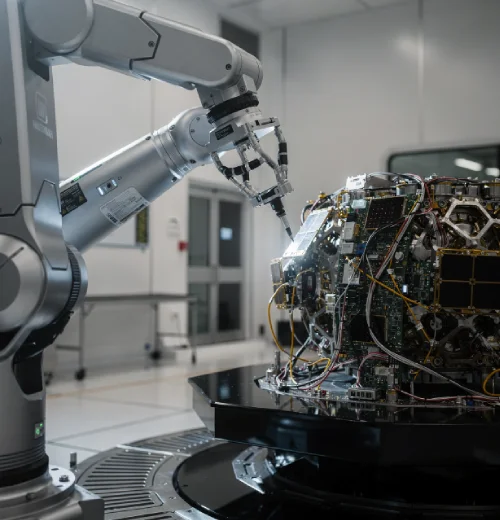
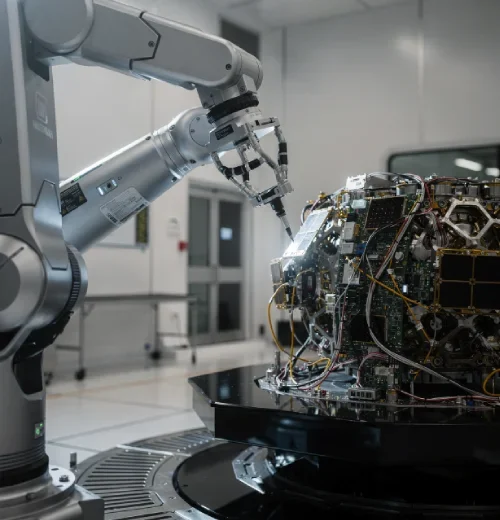
Before flight, propulsion modules and orbital transfer vehicles undergo vibration, thermal-vacuum and functional testing in RSat Space facilities. We validate performance across duty cycles, thermal environments and power conditions, reducing risk of anomalies once systems begin critical manoeuvres in orbit.
Qualification data, test reports and configuration baselines are delivered in formats suitable for defence, government and commercial procurement. This documentation helps programmes demonstrate due diligence to regulators, launch providers and insurers when adopting propulsion or OTV concepts within operational fleets.

Phone Number
+1 514-399-1097
Business Location
2329 Guenette St, Montreal, Quebec H4R 2E9, Canada
E-Mail ID
[email protected]Propulsion And OTVs Explained
What Missions Need Orbital Transfer Vehicles?
Our low Earth orbit satellite platforms are designed for defense agencies, government programs, commercial operators and research institutions that need reliable microsatellites without waiting five to seven years. RSat Space supports missions from Montréal and across allied markets that require imaging, RF intelligence, secure communications or technology demonstration in responsive, affordable LEO orbits.
How Do RSat Space OTVs Work?
RSat Space OTVs act as space tugs, collecting one or more small satellites from a drop-off orbit and using electric propulsion to raise, circularise or reshape their trajectories. Guidance, navigation and control software plans burns, monitors health and keeps missions within agreed safety limits, giving operators controlled, predictable transfers rather than improvised manoeuvres.
Can You Support GEO And Cislunar Missions?
Yes, RSat Space propulsion systems and orbital transfer vehicles are engineered to support GEO insertion and selected cislunar trajectories, depending on payload mass and timelines. Our teams in Montréal model delta-v budgets, radiation exposure and transfer durations so defence, commercial and government programmes can decide whether GEO transfer, high-Earth orbit or cislunar options best match their mission and regulatory constraints.
What Propulsion Options Are Available Today?
RSat Space develops electric propulsion based on Hall-effect thrusters, complemented by chemical or green monopropellant modules where high-thrust burns are required. Rather than selling stand-alone engines, we integrate propulsion into complete small satellites and orbital transfer vehicles, tailoring tank sizing, feed systems and power electronics to each mission so operators receive a coherent, flight-ready propulsion architecture instead of isolated components.
How Long Does Orbit Raising Typically Take?
Orbit-raising timelines depend on launch drop-off, payload mass, propulsion configuration and mission priorities. Electric propulsion from RSat Space often trades slightly longer transfer durations for significant mass and cost savings, while still meeting defence and commercial schedule constraints. During mission design, we provide realistic transfer windows and commissioning plans so customers can align orbital transfer with programme milestones and service-entry dates.
How Do You Manage Safety And Sustainability?
Every propulsion and orbital transfer concept is designed to respect launch-provider constraints, conjunction-risk management and debris-mitigation guidelines. RSat Space includes collision-avoidance capabilities, autonomous health checks and end-of-life manoeuvre budgets so satellites and OTVs can de-orbit or move to graveyard orbits. This approach supports safe, sustainable space operations while protecting GEO and LEO environments for future missions.
How Customised Are Propulsion And OTV Solutions?
Propulsion and orbital transfer vehicles from RSat Space are configured around each mission’s orbit, lifetime, security and regulatory requirements. We adjust thrust levels, propellant types, docking interfaces and autonomy features to match defence, telecom, civil or research use cases. This mission-specific tailoring helps customers avoid over-designed solutions and ensures every kilogram and watt contributes directly to mission performance.
What Support Do You Provide After Launch?
RSat Space can support propulsion burns, orbital transfer phases and long-term station-keeping through detailed procedures, training and, where desired, managed mobility services. Our Montréal and international teams help interpret telemetry, refine manoeuvre plans and adjust burn sequences as conditions evolve. This post-launch support ensures propulsion systems and OTVs continue to deliver reliable orbit control throughout the satellite’s operational life.
Why Choose Us for Propulsion & Orbital Transfer Vehicles (OTVs)
Choosing RSat Space for propulsion and orbital transfer vehicles means working with a partner that treats space mobility as a mission-critical system, not an afterthought. Our engineers design propulsion, guidance and orbital transfer profiles together, so orbit-raising, station-keeping and de-orbit manoeuvres all support your payload’s performance, coverage and lifetime from the outset.
RSat Space combines Canadian engineering capability in Montréal with experience on defence, government and commercial missions across multiple continents. That background allows us to navigate export controls, security requirements and regulatory expectations while still delivering agile propulsion and OTV solutions. Programmes benefit from propulsion architectures that are technically advanced yet aligned with procurement, compliance and assurance processes.
Because we build complete satellites and orbital transfer vehicles, not just individual thrusters, RSat Space can optimise the full stack: structures, power, thermal, avionics and propulsion. This system-level approach reduces integration risk, simplifies testing and produces mobility solutions that are easier to operate. Customers receive flight-ready space tugs and propulsion systems that have been engineered, qualified and documented as coherent products.
For defence and national security users, RSat Space offers propulsion and OTV concepts tailored to multi-domain operations. We design orbital mobility with ISR, secure communications and space-domain awareness in mind, supporting rapid deployment, repositioning and responsible disposal. Confidentiality, secure data handling and disciplined configuration control are built into our programmes from early design through on-orbit support.
Commercial and civil operators choose RSat Space because we connect propulsion and orbital transfer planning directly to business outcomes. Our teams model service-entry dates, coverage footprints, capacity repositioning and end-of-life strategies so stakeholders can see how space mobility influences revenue, resilience and long-term sustainability. Clear trade studies and transparent assumptions make it easier to justify investments in electric propulsion or orbital transfer vehicles.
Finally, RSat Space is committed to sustainable, responsible use of orbit. De-orbit burns, graveyard-orbit transfers and collision-avoidance capabilities are standard considerations in our propulsion and OTV designs. By partnering with us, you gain efficient access to GEO, high-Earth orbits and emerging cislunar opportunities while demonstrating to regulators, insurers and end-users that your mission takes space safety seriously from day one.

Happy Customers
Read Reviews...

We approached RSat Space with a complex problem: get a small GEO communications payload from a generic rideshare orbit into an exact slot over our region without the budget for a traditional large spacecraft. Their electric propulsion architecture and orbital transfer vehicle concept gave us a clear, costed path to GEO. Documentation, modelling and risk analysis were extremely thorough, which made internal approvals far easier.
— Michael Turner
⭐️⭐️⭐️⭐️⭐️Our defence programme needed responsive space access for ISR, but every conventional proposal assumed a dedicated launcher and long orbit-raising timeline. RSat Space helped us redesign around small satellites, integrated Hall-effect propulsion and an orbital transfer vehicle to reach the required orbit. The result is a flexible space-mobility layer that supports our multi-domain operations and can be adapted as requirements evolve.
— Sarah Bennett
⭐️⭐️⭐️⭐️⭐️As a commercial operator, we were worried about locking into a single orbit for the life of a satellite. RSat Space proposed an integrated propulsion and OTV strategy that allows us to reposition capacity as markets shift. Their engineers in Montréal walked our team through transfer scenarios, station-keeping plans and end-of-life disposal, giving us confidence that our investment in electric propulsion would stay viable for many years.
— David Hughes
⭐️⭐️⭐️⭐️⭐️Our research institution wanted to demonstrate advanced payloads in high-Earth orbit but lacked in-house experience with orbital transfer vehicles. RSat Space not only provided the propulsion and OTV design, they also supported mission design reviews, regulatory submissions and launch-provider interfaces. The combination of technical depth, transparent communication and focus on safe, sustainable transfers made them an invaluable partner for our first ambitious space-mobility project.
— Emily Carter
⭐️⭐️⭐️⭐️⭐️Discuss Your Space Mobility
Ready to plan propulsion or orbital transfer vehicles for your next mission? Share a few details about your satellite, timeline and target orbit, and our Montréal team will respond with tailored options. Fill out the form with your questions so RSat Space can evaluate feasibility, outline propulsion and OTV concepts and help you move confidently toward launch at every decision point.